


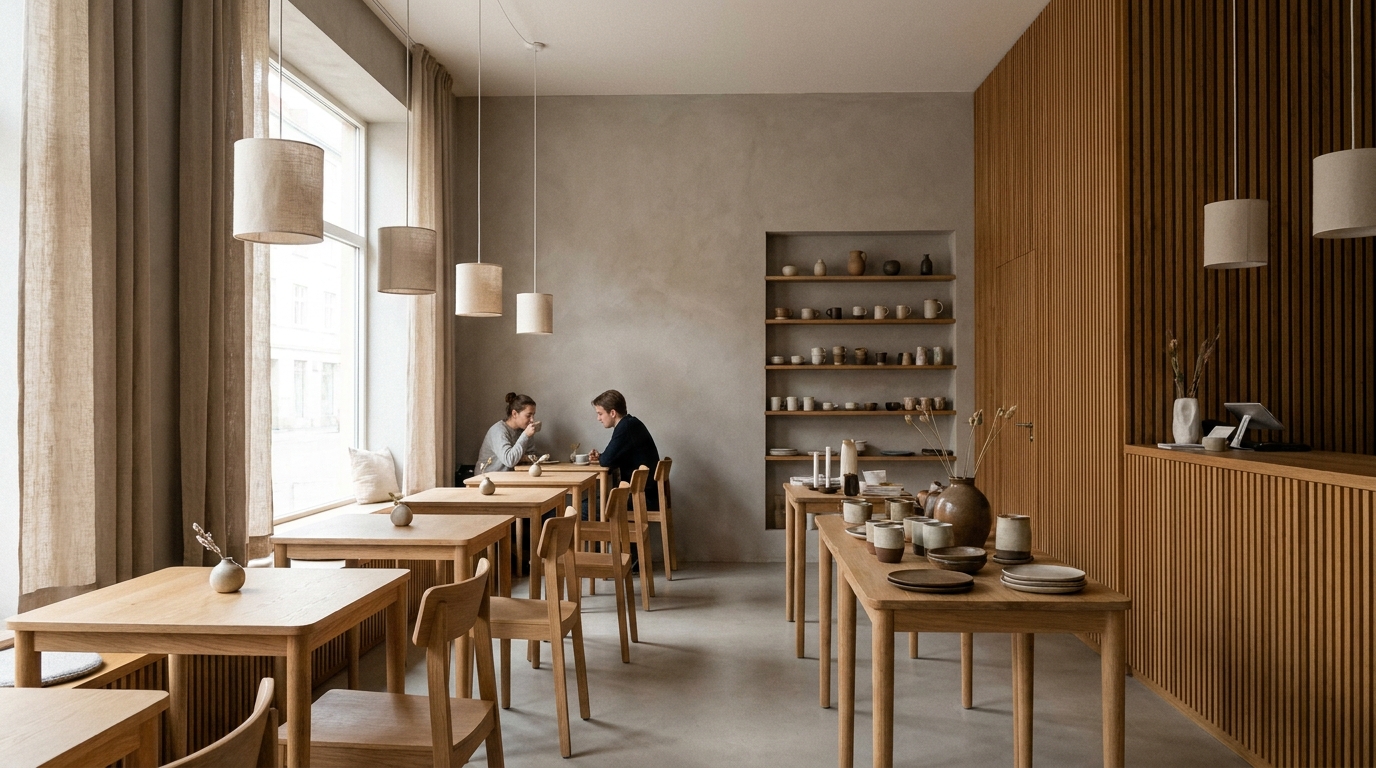
Walk through Senopati, Kemang, or any new development in South Jakarta and you'll see the same look repeated. Pale wood, off-white walls, low furniture, a single ceramic vase on an empty shelf. That's Japandi, and right now it's the default aesthetic for new cafes and restaurants in the city.
It earns its popularity. Japandi photographs beautifully, reads as calm and expensive, and signals "quiet luxury" to a young Jakarta crowd that lives on Instagram. The problem is what happens after the photos. A lot of these spaces look perfect for three months, then start to fall apart in ways the mood board never warned anyone about.
This article covers what Japandi actually is, why it spread so fast here, where it breaks down in a working F&B space, and how to build it so it survives Jakarta's climate and your customers.
What Japandi actually is
Japandi blends Japanese minimalism with Scandinavian warmth. From Japan it borrows wabi-sabi, the idea that worn, imperfect, handmade things are beautiful. From Scandinavia it takes hygge, the focus on coziness, soft light, and comfort. Put together you get clean lines, natural materials, muted earthy colors, and almost nothing on display.
The palette is narrow on purpose. Warm grays, soft whites, beige, charcoal, with the occasional olive or terracotta. Materials carry the look instead of color: light oak, bamboo, rattan, linen, raw plaster, handmade ceramics. Lighting stays soft and diffused, usually warm paper or fabric shades rather than bright downlights.
Why Jakarta took to it so hard is simpler than the design press makes it sound. The city is loud, hot, and crowded, and a calm room is a relief. Japandi gives owners a space that looks high-end without the cost of marble and brass, and it gives customers a backdrop worth photographing. For a cafe trying to attract customers, that last part matters more than most owners admit.
The material trap nobody mentions
Here's where japandi cafe design goes wrong in Jakarta. The look depends on light, pale timber. Most reference images come from Copenhagen and Kyoto, where the wood is oak, and oak is the worst choice you can make in this climate.
Jakarta humidity sits above 75% most of the year. Oak absorbs moisture, then cracks, shrinks, and warps as it swells and dries. It also needs sealing and regular refinishing to survive at all. You'll get a beautiful pale floor that's gapping and cupping within a year, and a refinishing bill on top.
Teak does the same job and handles the climate. Its natural oil resists moisture, rot, and insects, and it needs far less maintenance. The catch is the color. Teak runs warmer and darker than the Scandinavian oak in the reference photos, so a good designer adjusts the rest of the palette to keep the Japandi feel rather than forcing oak where it can't survive. Bamboo and properly treated rattan also hold up well and fit the look.
This is the same logic that kills SPC flooring and European timber facades here. A material that works in a dry climate is not automatically a material that works in yours. Specify for Jakarta, not for the Pinterest board.
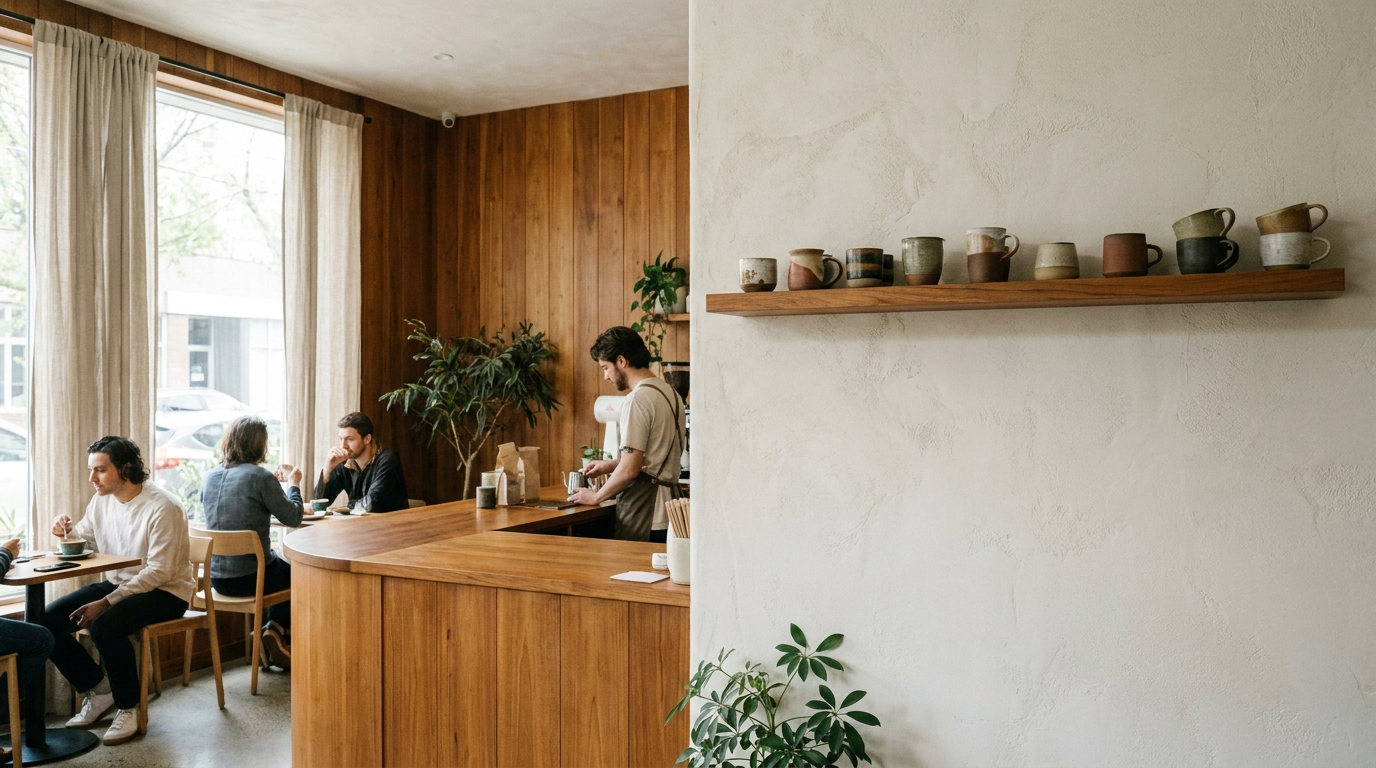
Choosing materials for a Japandi cafe? Get specifications that survive Jakarta's humidity, not just ones that look right in renders.
Where Japandi breaks down in a working space
Japandi was designed for homes and galleries. A cafe or restaurant is neither, and three things tend to break in practice.
Low seating fights your table turnover
Japandi loves low benches, low chairs, low tables. They look serene. They also keep customers comfortable for hours, which is fine for a home and a problem for an F&B business living on table turnover. If your model depends on moving people through at lunch, very low lounge seating will quietly cut your covers per day. Mix it. Use the low, soft seating for the corners and the photos, and keep standard-height tables where you actually need turnover.
Raw finishes show wear fast
Wabi-sabi celebrates imperfection, so a lot of Japandi specs raw plaster, unsealed wood, and matte surfaces. In a home that ages gracefully. In a cafe, that raw plaster wall next to the pickup counter is going to collect coffee splashes, hand marks, and scuffs within weeks, and matte unsealed wood soaks up oil and grease near the kitchen. The fix isn't to abandon the look. It's to use washable matte finishes and sealed timber in the high-contact zones, and save the genuinely raw materials for walls customers don't touch.
The quiet room gets loud
Hard floors, plaster walls, timber, and minimal soft furnishing look clean and sound terrible. Japandi spaces with no soft surfaces turn into echo chambers once they fill with people, which kills the calm the whole style was supposed to create. Linen curtains, fabric seating, and rugs are already part of the Japandi vocabulary, so use them deliberately to control the noise instead of treating them as decoration.
Doing Japandi right costs more, not less
The biggest misread is that minimal means cheap. It's the opposite. When a space has almost nothing in it, every surface and joint is exposed, so the quality has to carry the room.
A busy industrial cafe can hide rough carpentry behind clutter and pipes. A Japandi space can't hide anything. A misaligned timber joint, a wavy plaster wall, a cabinet door that doesn't sit flush, all of it shows. Empty space is unforgiving, and pulling it off needs better craftsmanship, not less, which means the build often costs more than a busier style at the same size.
For reference, a decent commercial fit-out in Jakarta runs around 5 to 6 million IDR per square meter, and a premium one closer to 11 million. Japandi done properly sits at the higher end of that range because the finishing carries the design. Spend it on the few elements people actually touch and see up close: the counter, the main timber wall, the lighting. One well-made feature beats ten mediocre minimalist gestures.
The other hidden cost is restraint. A real Japandi space stays nearly empty, and most owners can't resist filling shelves and adding decoration until the calm is gone and it just looks cluttered. If you can't leave a shelf empty, this style isn't for you, and that's a budget question as much as a taste one.
Make it work for the business, not the mood board
Japandi is a strong choice for a Jakarta cafe or restaurant when the brand actually fits, calm, quiet, considered, a little premium. It's a bad choice if you're chasing it only because the last three openings down the street did it.
Before you commit, ask the three questions that decide any design. Can it be built to the standard the style demands? Can the materials survive this climate and this traffic? Does it serve how the business actually runs, from table turnover to cleaning? Japandi interior Jakarta projects fail when the answer to any of those is no and someone builds it anyway because the renders looked good.
The aesthetic is genuinely good. It just demands more discipline than its soft, simple surface suggests. Get the materials and the craftsmanship right for this city, and a Japandi space will still look calm and expensive long after the trend moves on. Get them wrong, and you'll be refinishing warped oak by the time the next style arrives.
Thinking about a Japandi fit-out for your cafe or restaurant? Talk to us about a design built for Jakarta's climate, your traffic, and your budget, not just the photos.